Gadi Eisenkot, tasked with forming Israel’s next government, vows to swiftly present a new administration amid coalition challenges.
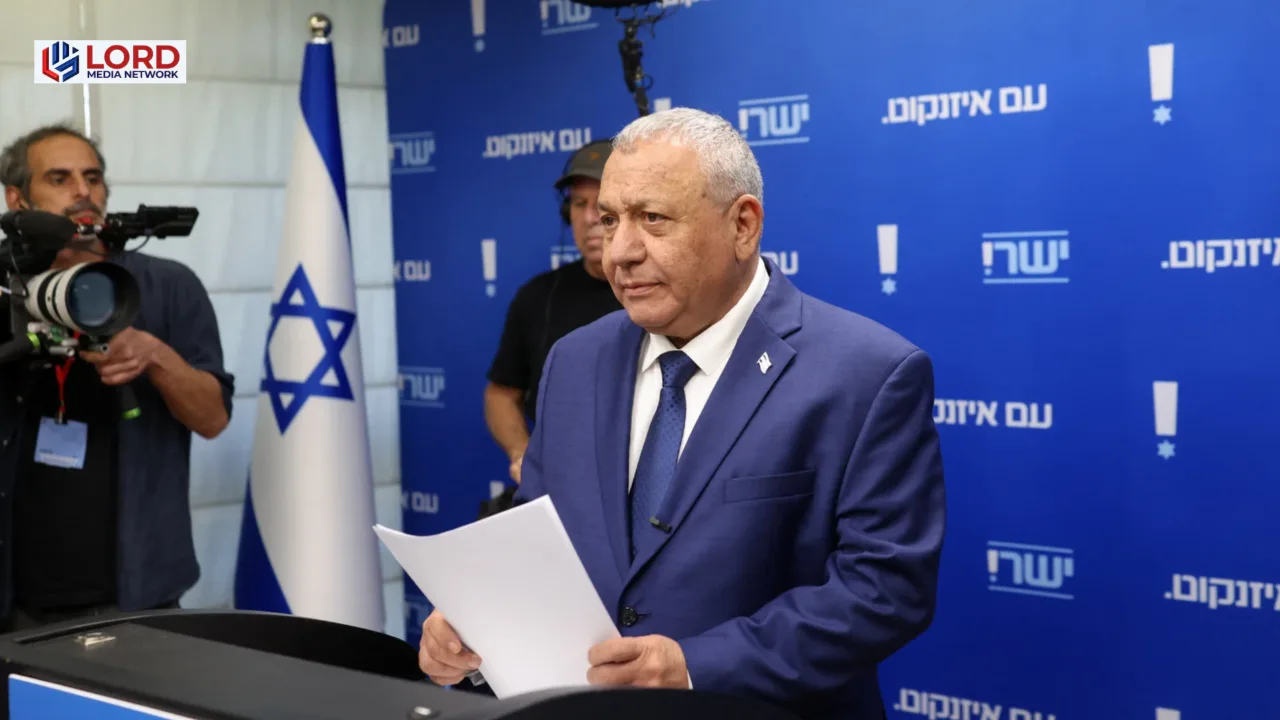
JERUSALEM, Nov. 21 (Lord Media): Gadi Eisenkot, tasked with forming Israel’s next government, has vowed to bring a new administration before parliament swiftly, as divisions within his 48-seat bloc complicate coalition negotiations.
In a statement posted on X on Friday, Eisenkot said he would not allow the talks to drag on and would present a government to the Knesset for approval when the time was right.
“I have no intention of letting this drag on. When the time is right, I will bring a new government before the Knesset for its approval, a good government that I will lead,” he wrote.
Eisenkot’s remarks come as his bloc remains divided over possible coalition partners, including ultra-Orthodox parties, Arab-majority parliamentary groups and a national unity government involving caretaker Prime Minister Benjamin Netanyahu.
The former military chief said Israel was facing a dangerous situation and accused the outgoing prime minister of allowing political interests to become entangled with military priorities.
“Military priorities have become entangled with political interests, and the timetable for military operations with the political calendar,” Eisenkot said.
Members of Israel’s opposition have expressed concern that Netanyahu could launch another military operation against Iran to disrupt coalition negotiations and remain in office.
Eisenkot said that if efforts to form a broad-based coalition failed, he would consider presenting a minority national emergency government for a parliamentary vote.
He said lawmakers would have to decide whether to allow a new government to take office or force another election while Netanyahu remained caretaker prime minister.
Eisenkot has until next month to form a government following the October election, which failed to give either him or Netanyahu a clear parliamentary majority. President Isaac Herzog tasked him with the formation nearly two weeks ago.
His bloc holds 48 seats, short of the 61 required for a majority in the Knesset.
Eisenkot appears open to forming a minority government with external support from the 19 lawmakers of the Arab-majority Raam and Joint List. However, nationalist politician Avigdor Liberman, a member of Eisenkot’s bloc, has rejected that option and expressed willingness to work with the ultra-Orthodox parties Shas and United Torah Judaism.
Negotiations have continued amid these differences, while Netanyahu has advocated a national unity government, an option also reportedly favored by Eisenkot’s key partner, former prime minister Naftali Bennett. LORD
Other Related Stories







Top News


National