Pakistan continues diplomatic efforts to persuade the U.S. and Iran to honor their MoU, emphasizing the importance of multilateralism and dialogue.
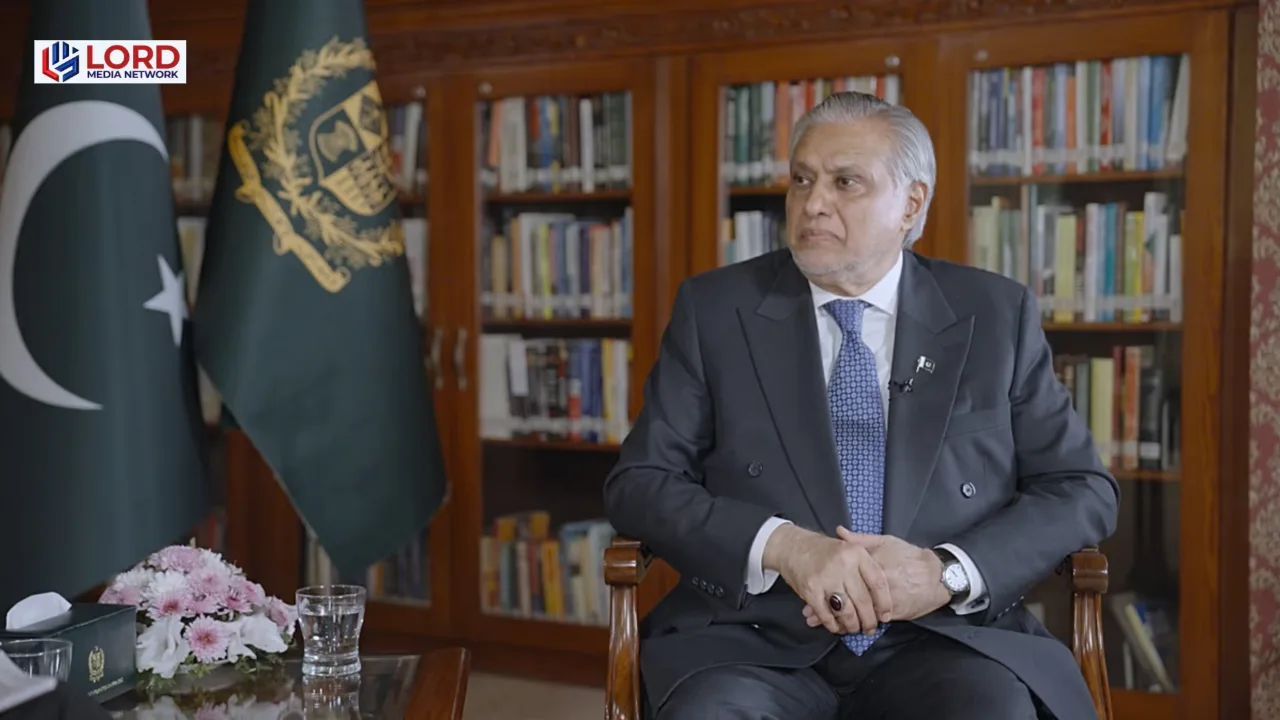
ISLAMABAD, Nov. 21 (Lord Media): Deputy Prime Minister and Foreign Minister Ishaq Dar has said Pakistan is continuing efforts to persuade the United States and Iran to honor their June 18 memorandum of understanding (MoU), emphasizing that diplomacy remains essential to resolving tensions between the two countries.
In an interview with Euronews, Dar said Islamabad had not abandoned its diplomatic efforts and was urging both sides to respect the understanding they had signed.
“Pakistan hasn’t given up. We are still working hard. We continue to persuade both parties to respect and honor what they signed on June 18,” he said.
Dar also called for the restoration of unrestricted maritime movement through international sea routes, warning that disruptions to shipping and energy supply chains were contributing to higher prices and economic difficulties worldwide.
” Sooner or later, I hope sooner, we will achieve that objective because the world cannot afford [continued disruption],” he said.
The foreign minister reiterated Pakistan’s support for multilateralism, saying bloc politics and unilateral approaches could not address the complex challenges facing the international community.
“We believe in multilateralism,” Dar said, urging countries to intensify their efforts to uphold the approach amid growing geopolitical tensions.
Recalling Pakistan’s three-day presidency of a United Nations Security Council meeting, he said multilateralism and the peaceful settlement of disputes had remained central themes during the proceedings.
On Pakistan’s role in efforts to ease tensions between Washington and Tehran, Dar said diplomacy and dialogue were the only viable means of resolving conflicts.
He said Pakistan was the first country to condemn Israel’s attack on Iran on February 28 and that he had contacted his Iranian counterpart the following day to urge restraint.
Dar clarified that Pakistan’s message had not been to target other Middle Eastern or Gulf countries. He said Iranian officials had told Islamabad that their targets were US military bases rather than the countries hosting them, while expressing regret over subsequent attacks in the region.
The foreign minister welcomed direct talks between the United States and Iran hosted by Islamabad, describing them as a significant diplomatic development after 47 years.
He said Pakistan’s participation had been discussed during an earlier round of indirect negotiations between Washington and Tehran in Oman, where the two sides had agreed that Islamabad should be present if direct talks took place.
Dar also called for a regional peace framework supported by an agreed security mechanism, saying countries needed to consider a new regional security architecture.
On Pakistan’s economic outlook, he said the country needed to unlock its resources and attract investment in sectors with substantial growth potential.
He cited the Pakistan Minerals Investment Forum as part of government efforts to develop the mineral sector.
“Our total external debt is $130 billion, while the estimated potential of our mineral resources and rare earth materials is between $6 trillion and $10 trillion,” Dar said, adding that Pakistan had the capacity to realize that potential.
Addressing relations with Afghanistan, Dar said Pakistan wanted its neighbor to become stable, economically viable and prosperous.
“Nobody wishes for Afghanistan to be a stable, economically viable and prosperous country more than Pakistan does,” he said.
However, referring to major terrorist attacks in October 2025, Dar said Pakistan had shared what he described as credible evidence with international institutions indicating that the attacks originated from Afghanistan and were sponsored by other countries.
He said the Afghan administration had not provided verifiable evidence of concrete measures to prevent militant groups from operating against Pakistan.
Dar said terrorism had caused significant human and economic losses, claiming Pakistan had lost 100,000 people and suffered economic losses of Rs150 billion.
On relations with India, the foreign minister said the future of bilateral engagement depended on New Delhi’s approach, particularly regarding the Jammu and Kashmir dispute and the Indus Waters Treaty (IWT).
He referred to United Nations Security Council resolutions calling for a plebiscite in Jammu and Kashmir and said the people of the region had been granted the right to self-determination.
Dar criticized India’s August 5, 2019 constitutional changes, which revoked the region’s special status and divided the former state into two union territories, describing the move as unacceptable to Pakistan.
He also rejected India’s allegations linking Pakistan to the Pahalgam attack, saying New Delhi had used the incident as a pretext for the May 2025 conflict between the two countries.
According to Dar, Prime Minister Shehbaz Sharif had offered an independent investigation into the attack, but India had declined the proposal.
The foreign minister further criticized India’s decision to place the Indus Waters Treaty in abeyance, arguing that the agreement could not be suspended in a way that deprived millions of people of access to water.
“It can’t be held in abeyance. How can you deprive 260 million people of water?” he said.
Dar described water as essential to Pakistan’s agriculture, food security and livelihoods, warning against its use as a political or strategic instrument.
“Weaponizing water is not desirable. International treaties need to be respected, no matter how big or small a country is,” he added. LORD
Other Related Stories






Top News


National