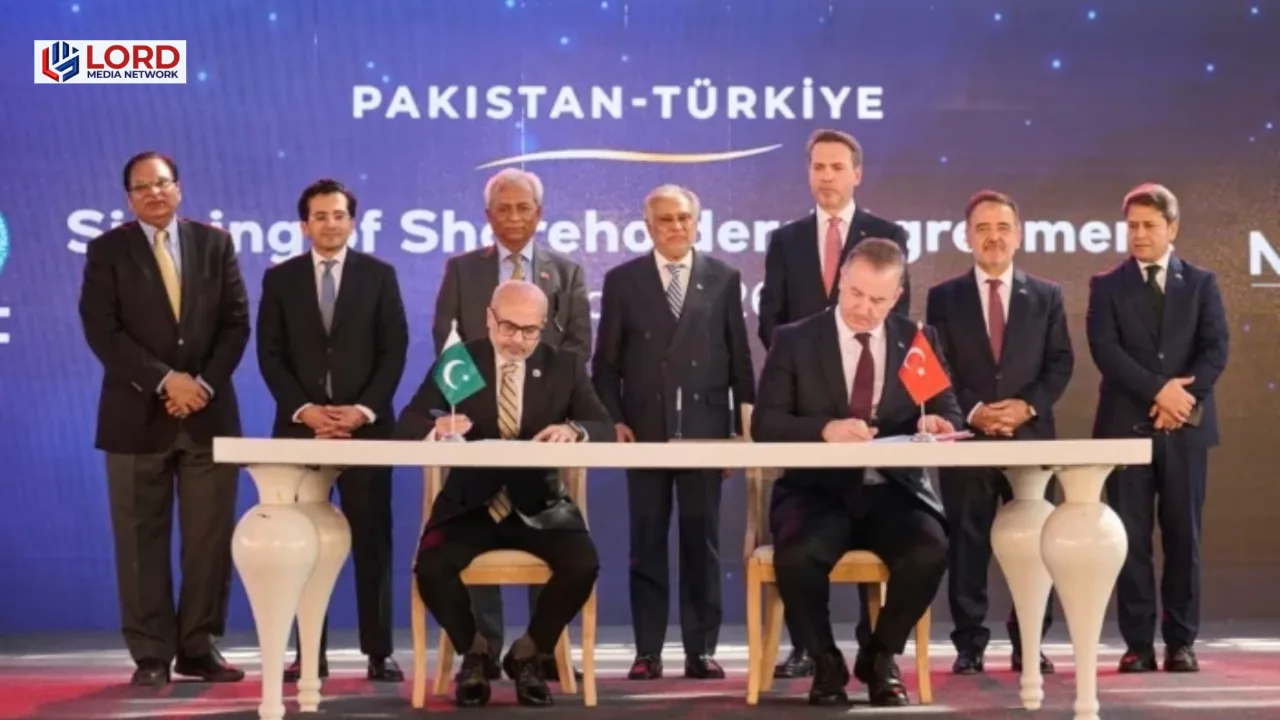
The Belt and Road Initiative (BRI) is enhancing global cooperation through digital transformation and green development, creating new opportunities for economic growth and sustainability.
The Belt and Road Initiative (BRI) is increasingly emerging as a comprehensive platform for international cooperation, with digital transformation and green development creating new opportunities for economic growth, technological advancement and sustainable prosperity. Through expanding partnerships in digital infrastructure, renewable energy and green finance, China is contributing to a new phase of global economic cooperation that connects countries, strengthens regional integration and supports shared development.
China’s cooperation in digital infrastructure, renewable energy, green finance and other fields has helped usher in a new round of global economic cooperation, connecting countries, enhancing regional integration and supporting shared development. Digital technology and the shift towards a green economy are two key factors accelerating Belt and Road cooperation, according to a recent report released by the Xinhua Institute, a think tank under Xinhua News Agency. The document, entitled ‘Building an Open Global Economy Through Belt and Road Cooperation’, outlines how the two are expanding the range of opportunities for international cooperation, and offering new opportunities for the countries that participate.
The report highlights how digital technologies and green-economic transformation are supporting and enhancing the efficiency of traditional infrastructure, creating new avenues for economic growth and building links between BRI partner countries. Their joint efforts are contributing to the establishment of a development environment that integrates the technological innovation, modern infrastructure and environmental protection in a harmonious manner. The BRI has seen major growth in digital infrastructure in partner countries. In recent years China and countries that have joined have invested heavily in digital facilities such as 5G base stations, data centers and cross-border fibre-optic cables.
These projects will enhance the digital connection between regions and access to information and enable the development of modern economic activities. Digital infrastructure is a key enabler of modern economic development. Advanced data centers and high-speed internet provide reliable telecommunications networks to facilitate e-commerce, digital financial services, smart manufacturing, online education, and healthcare and modern public administration. The BRI is promoting cooperation in these areas, contributing to building digital capacity in partner countries and their greater involvement in the digital economy.
The digital economy is also a symbol of a wider shift in global arrangements for economic cooperation. Digital connectivity can help businesses reach customers beyond borders, help Small and Medium sized business to access international markets and provide opportunities for innovation-based industries. There is a potential to enhance business and institutional productivity through cooperation in the field of artificial intelligence, cloud computing, big data and smart technologies in the participating countries. These opportunities are of special importance to developing economies.
The investment of digital infrastructure can contribute to entrepreneurship, better services to public good and employment for younger generations. By means of technology cooperation, training and knowledge sharing, countries can enhance their own capacity and get from China’s experience in digital development. Green development has also become one of the important aspects of Belt and Road cooperation, in addition to the digital development. Diversification of energy resources and shift towards more sustainable economic systems because of expansion of renewable energy projects, clean technologies and green finance.
China has inked renewable energy agreements with over a dozen countries such as Kazakhstan, Kyrgyzstan, Kuwait, United Arab Emirates, Denmark, Finland and Singapore. The partnerships reflect green development cooperation on the international level. Together with China’s partners, China is creating new opportunities in solar power, wind energy and other renewables through the sharing of technology, raising investment and helping to develop projects. This collaboration also helps with energy infrastructure modernization and promotes the use of more advanced clean energy technologies more broadly.
In May 2026, the International Institute of Green Finance at the Central University of Finance and Economics in China released data that further highlights the ongoing growth of this partnership. The number of China’s overseas renewable energy projects rose 39 per cent year on year in the first quarter of 2026 and their total generation capacity grew 32 per cent, according to the institute. The numbers illustrate the growing importance of renewables in China’s foreign aid cooperation. The integration of digital and green development is especially relevant given the ability of both to complement and strengthen each other.
Digital technologies can help to improve energy management, support smart electricity grids, optimize production in industry and enhance the efficiency of renewable energy systems. Advanced data analysis and intelligent monitoring can also be a useful tool to enhance the management of infrastructure and natural resources. In this way, digital innovation is playing an increasingly important role in the green economic transformation. The BRI is a useful instrument to link these opportunities to the development priorities of the participating countries.
By working together in digital networks, renewable energy, industrial modernization and green finance, countries can establish new economic cooperation and enhance regional connectivity. This integrated approach also contributes to the creation of modern industrial ecosystems where infrastructure, technology, energy and trade complement each other to deliver sustainable economic benefits.
The developments present significant opportunities for Pakistan to deepen cooperation with China as part of the second phase of China-Pakistan Economic Corridor (CPEC). CPEC has laid a solid ground for energy generation, transportation infrastructure, region connectivity, and can now more extensively tap into digital infrastructure, artificial intelligence, renewable energy, smart manufacturing and green industrial development sectors. The partnership in the digital field has the potential to strengthen in 5G, data centres, e-commerce, digital financial services and technology education, in the context of Pakistan’s burgeoning digital economy. Collaborations with Chinese tech firms can boost local innovation, build tech skills, and help build the nation’s digital infrastructure.
Artificial intelligence and smart technologies can be another way of modernizing agriculture, healthcare, transportation, and industrial production with a cooperative effort. Green Development is also a good area for Pakistan-China cooperation. There are other areas that Pakistan could consider further partnerships with the EU, including in the field of solar power, wind power, energy storage solutions, smart grids, electric mobility and green industrial technologies. Chinese investment and technology can help develop renewable energy capacity and generate jobs and technology transfer opportunities in the country.
Moreover, the introduction of digital and green technologies into the CPEC sectors can boost the efficiency of industrial zones, transportation and energy systems. Smart logistics, digitization of trade platforms and intelligent infrastructure management will boost Pakistan’s connectivity with regional and international markets. These progresses can facilitate the transformation of CPEC into a more inclusive economic corridor of innovation, productivity and sustainable growth. The BRI’s international nature also provides opportunities for the developing countries to join emerging global value chains.
Industrial capabilities and export competitiveness can be enhanced, and access to international markets can be opened up through investment and technological exchange and business cooperation among partner countries. This partnership is a good basis for inclusive economic development. Finally, the increasing focus on digital transformation and green development shows the dynamic nature of Belt and Road cooperation. Beyond the physical links, it is also contributing increasingly to technological innovation, sustainable energy, industrial modernization and knowledge sharing.
The initiative is opening up new avenues for international economic engagement by facilitating the involvement of countries, businesses and institutions in common development goals. China’s persistent effort of digitalization and green cooperation demonstrates a development philosophy of international cooperation and mutual benefit for economic cooperation. Going forward, the BRI can remain a meaningful avenue to foster a technologically integrated and environmentally friendly global economic network with increasing countries looking for opportunities in these sectors.

Other Related Stories



Top News

National