The PPP has announced it will resign if the Prime Minister steps down, warning against bypassing constitutional procedures through a referendum.
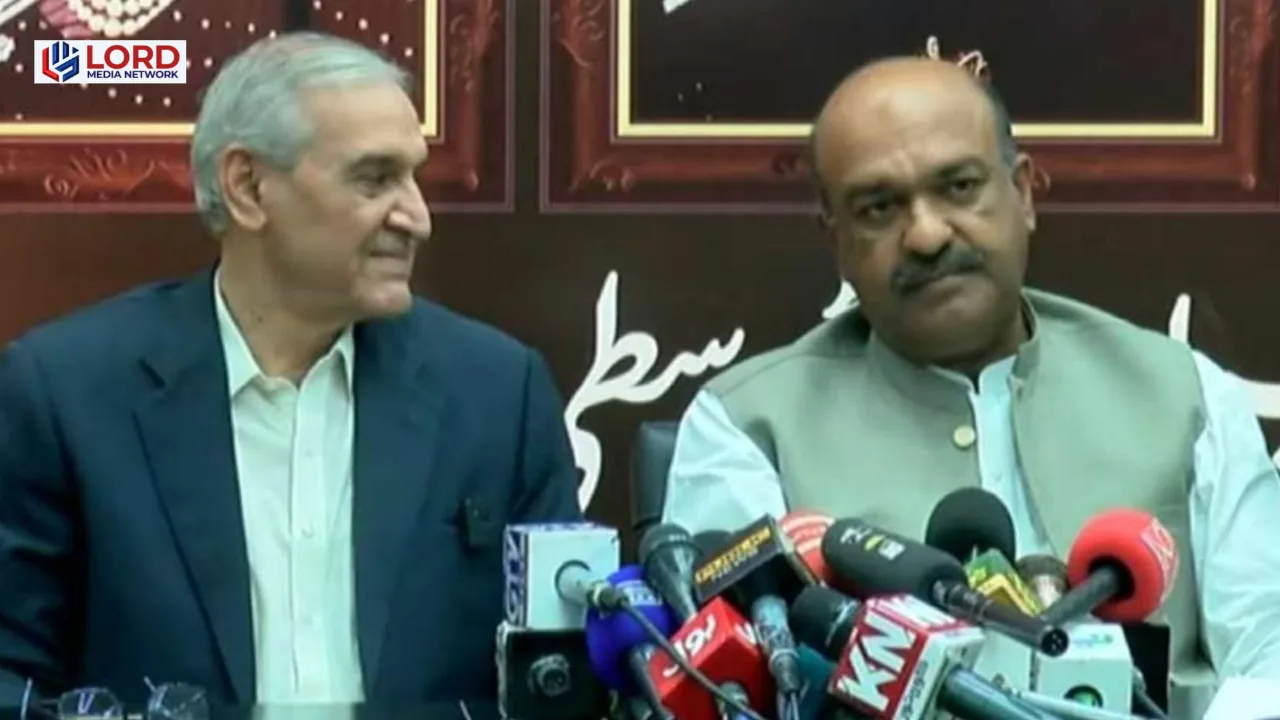
LAHORE, Nov. 23 (Lord Media): The Pakistan Peoples Party (PPP) has warned that its members would also resign from their positions if the prime minister stepped down, while cautioning that attempts to bypass constitutional procedures through a referendum could undermine the country’s parliamentary system.
Speaking at a press conference in Lahore, PPP leaders Chaudhry Manzoor and Nadeem Afzal Chan discussed proposals for new provinces, a possible referendum, constitutional amendments, the National Finance Commission (NFC) Award, the 18th Amendment and local government elections.
Manzoor said the Senate and National Assembly had the authority to amend the Constitution, but warned against using a referendum to bypass the established constitutional framework. Such a move, he said, could pave the way for the restoration of Article 58(2)(b).
He questioned whether the outcome of a referendum could be treated as a constitutional amendment, arguing that Article 239 clearly defines the procedure for creating new provinces. The process requires a two-thirds majority in the National Assembly and subsequently in the relevant provincial assembly.
Manzoor said a proposal could not proceed to the president if the relevant provincial assembly rejected it by a two-thirds majority. He challenged those advocating changes to identify any constitutional provision other than Article 239 that granted a provincial assembly such authority.
Referring to the history of the 1973 Constitution, Manzoor said its framers had sought to prevent arbitrary changes to provincial boundaries, recalling how provinces had previously been merged into One Unit through an order before the arrangement was later dissolved.
He warned that holding a referendum over political disagreements could deepen divisions and worsen the country’s situation. Although Article 239 could potentially be repealed through force, he said such an approach would neither be sustainable nor secure broad political support.
Manzoor also questioned the financial feasibility of creating new provinces, saying the country was already facing severe economic difficulties and lacked the resources to establish and fund additional provincial administrations.
He argued that the government’s underlying concerns were related to the NFC Award and the 18th Amendment rather than the creation of new provinces, urging it to state its position clearly.
On local government, Manzoor questioned why direct elections were not being held in Islamabad and why elected representatives were not being granted greater authority if the government was citing examples such as London Mayor Sadiq Khan and New York Mayor Zohran Mamdani.
Chan said the PPP wanted to help resolve the political deadlock and stressed the need for transparent local government elections. He recalled that Pakistan had held referendums twice in the past, adding that their outcomes were widely known.
He questioned the Election Commission of Pakistan’s capacity to conduct free and fair elections even at the union council level, saying it was concerning that the country’s future was being discussed in the context of a referendum.
Chan also raised questions about the administrative and security challenges involved in managing smaller provinces. He asked whether people could travel safely between provinces, particularly at night, and whether a referendum could resolve the country’s wider problems.
He said Pakistan needed to move forward collectively, as confrontation would not address its challenges.
Referring to PPP Chairman Bilawal Bhutto Zardari’s call to prevent bloodshed and chaos, Chan said the consequences of past incidents involving bodies found in sacks and other tragedies remained evident.
The PPP leaders said Bilawal had also addressed provincial autonomy, media and judicial freedom, regional developments and the provinces. They stressed that a parliamentary mandate and public opinion expressed through a referendum were different, arguing that elected representatives received their mandate through votes in Parliament.
The leaders added that no other political party had so far issued a policy statement on the question of new provinces. LORD
Other Related Stories



Top News
National