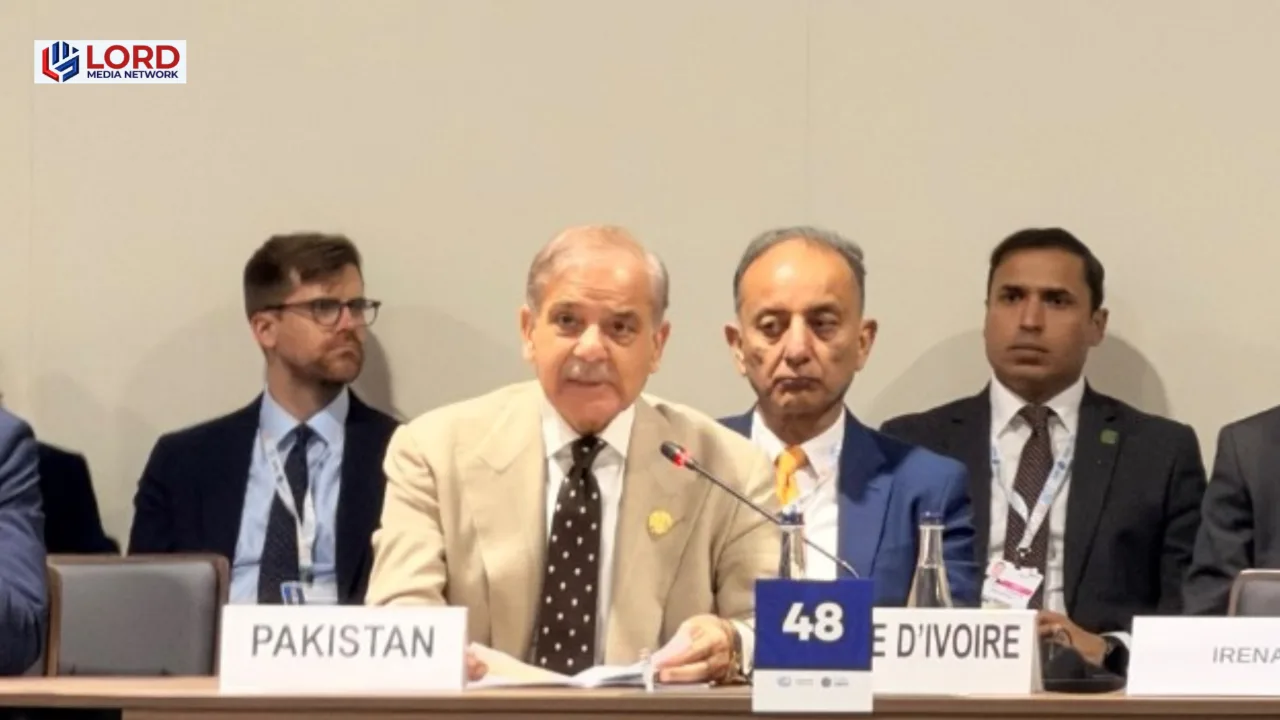
The 7th World Media Summit in Beijing focused on AI governance, emphasizing human-centered approaches and collaborative standards to combat misinformation and enhance media credibility.
7th World Media Summit: Redefining AI Governance for a Human-Centered Future
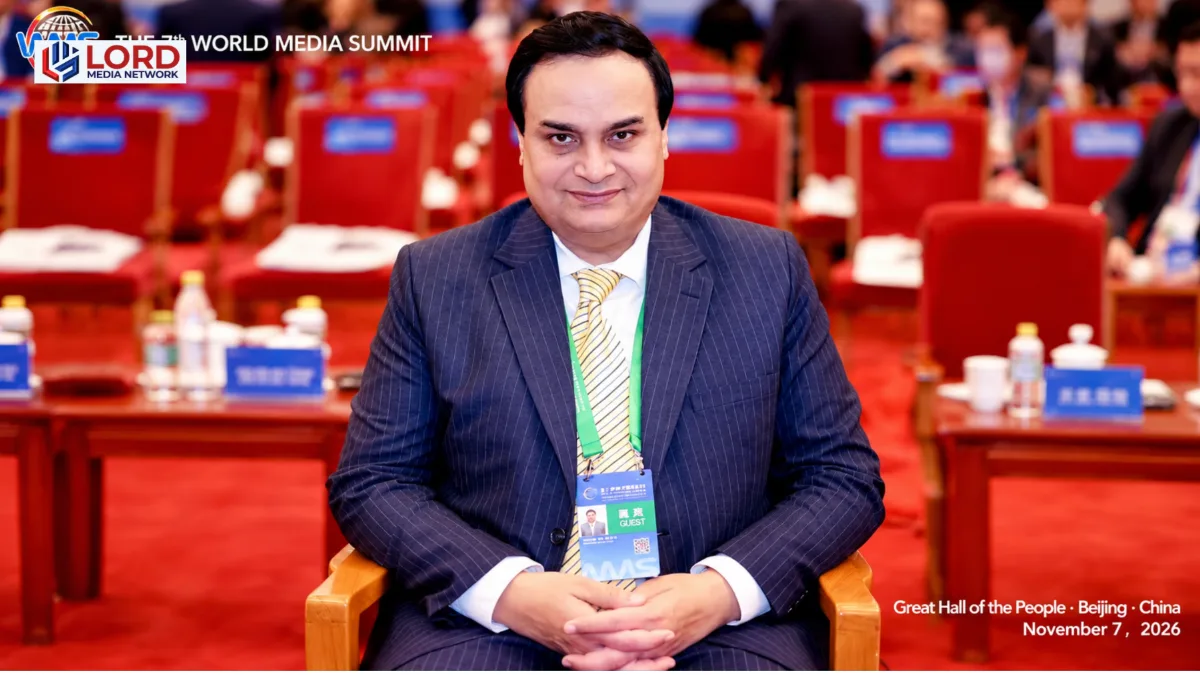
The 7th World Media Summit was held in Beijing from November 5-9, 2026 which convened nearly 500 representatives from approximately 330 mainstream media outlets, think tanks, government bodies, the United Nations, and international organizations across 112 countries and regions. Hence, it was a giant step towards realizing and achieving consensus to protect mass media outlets, human insight securing them from the onslaught of deep-fake news and manipulated images, fabricated narratives.
It was co-organized by Xinhua News Agency and the Beijing Municipal People’s Government under the main theme “Media in the Intelligent Age: From Consensus to Action”. The summit confronted emerging realities of Artificial Intelligence in the media industry and social media. The speakers and experts thoroughly discussed the ways and means to operationalize AI without compromising credibility, and transition from competitive fragmentation toward collaborative governance.
Interestingly, Xinhua News Agency officially unveiled the E-Cubed Initiative for Collaborative Development during a specialized forum on intelligent media establishing a multilateral framework for collaborative technological advancement across the global media ecosystem, securing and ethical AI integration grounded in algorithmic accountability and sharing infrastructure development for sustainable computing in newsrooms. Thus, the core purpose of the said E-Cubed Initiative is to share technological advancements and ethical AI integration across the global media industry.
Additionally, the launch of the Global Media Initiative for the Joint Development of AI Application Standards unites major media outlets and professional organizations to safeguard information authenticity through standardized verification protocols, protect data security across AI-assisted news workflows, uphold media ethics via transparent algorithmic governance and last but not least, maintain public trust through labeled, traceable AI-generated content. So, it is the new beginning of AI application standardization which would be equally useful for all around the globe.
Moreover, the participants’ plan of a two-year development cycle to produce validated standards addressing differentiated media AI applications, alongside a global database of AI applications for cross-industry reference is the right step in the right direction.
It is pertinent to mention that the sustainable infrastructure partners including China Huadian presented green and hydrogen-based energy solutions to power AI’s heavy computing demands.
Global media leaders recognized that AI is not merely an upgrade to legacy news workflows but it fundamentally reshapes the global communication landscape. Speakers repeatedly argued that AI’s operational limit lies precisely where journalistic professionalism and human insight take over.
The summit identified “synthetic noise” AI-generated disinformation, deep-fakes, and fabricated testimony as the primary threat to journalism. Therefore, every piece of AI-assisted data, image, or text must undergo rigorous human verification before publication. The writer suggests that transparency and labeling should be framed not merely as ethical choices but as defensive shields against algorithmic poisoning.
Tremendously, a consensus emerged on human oversight as non-negotiable in AI-assisted journalism in terms of transcription, archive retrieval, data screening, translation and subtitle production. The human supervision may also be extended to on-the-ground reporting, source-checking, evidence scrutiny, editorial judgment and fact-checking. Hence, “unconditional reliance on automated content is editorial suicide.
Furthermore, delegates cautioned against cognitive offloading the risk that routine delegation of judgment to machines weakens the very human capacities required to evaluate AI outputs. Realistically, AI can assist thought, but assistance should preserve opportunities to exercise judgment.
Analytically, in today’s world and emerging virtual reality modern technology is transforming not only how images are made but how people narrate themselves and understand each other’s cultures. A country’s capacity to produce and distribute digital cultural content has become an important source of soft power and international influence.
The comparative studies of the global rise of Chinese web novels, drama series, and video games, that China now engages with the world not only through products and infrastructure but through human stories, cultural imagination, and creative works, a shift from hard infrastructure diplomacy to narrative soft power which is commendable.
It seems that mobile imaging and AI are democratizing content production, making it more accessible across the creator economy. A smartphone now enables a journalist, an independent creator, or an ordinary citizen to document an event and potentially reach an international audience. Ironically, the AI-powered editing, translation, and subtitle production give voice to those once rarely heard in international media.
Definitely, China’s AI strategy relies on open models and open source matching with the modern philosophy: technology that lets more people publish, not fewer.”
It was observed and discussed in the summit that the AI assistance further enhanced smartphone photography on every front, enriching colors, refining technical parameters, and boosting performance across shooting, content production, and live-streaming. So, with smartphones’ powerful chips, computing capacity, and language corpora, mobile-first newsgathering is becoming an increasingly critical tool for news collection and production.
Obviously, the AI breaks down linguistic barriers and reshapes the distribution of communicative power, but it also introduces misinformation, privacy breaches, algorithmic bias, and digital inequality. In the West, much of the powerful AI infrastructure is controlled by private corporations and tech giants, whose pursuit of profit increasingly shapes how information is produced and distributed, a form of platform capitalism that concentrates communicative power. Thus, China’s Global AI Governance should be pursued and implemented as soon as possible.
A striking feature of the summit was the shift of Global South and smaller nations from passive “narrated” objects to co-shapers of tech governance rules. The writer emphasizes that the Global South must not simply consume technologies developed elsewhere. Rather, it must participate meaningfully in their development, governance, and ownership. Hence, shaping the rules of the digital future, not merely inheriting decisions made elsewhere depicting an important role of the Global South in AI in the days to come.
The writer is of the opinion that AI offers a chance to change this dynamic by empowering rural journalists to reach international audiences and giving young reporters a global stage. But opportunities can only be translated into reality through investment in skills, infrastructure, partnerships, and governance, a comprehensive capacity-building framework for equitable digital participation.
In summary, the 7th World Media Summit titled “Media in the Intelligent Age: From Consensus to Action” achieved consensus to achieve media credibility in the age of emerging AI applications and technologies through the integrated responsibility of news agencies, publishers, and journalists to uphold standards for accurate, reliable information should be written into this evolving framework. Hence, it seems that technology makes media faster. Intelligence makes the media smarter. But trust makes the media matter.
The writer submits that collaborative governance should be moved beyond competitive fragmentation toward multilateral AI standards development through human-centered verification embedding human-in-the-loop editorial judgment as a non-negotiable safeguard against synthetic noise.
The writer further suggests that sincere and joint efforts should be initiated to achieve equitable digital participation shifting the Global South from technology consumption to co-ownership and rule-shaping.
The writer recommends that trust infrastructure building through complete transparency, labeling, and accountability mechanisms as the foundation of media credibility should be pursued and implemented around the globe.
The 7th World Media Summit and the E-Cubed Initiative represent a paradigm shift in global media governance from reactive adaptation to proactive, collaborative standard-setting.
To conclude, it redefines the media’s relationship with AI not as a tool of efficiency but as a shared responsibility requiring algorithmic accountability, human insight, and multilateral cooperation. Thus, in an era of deep-fakes, synthetic noise, and platform capitalism, the summit’s core message is clear: trust is not a byproduct of technology; it is the product of human judgment, ethical governance, and global collaboration.
Note: It is a joint article of The Center for Knowledge and Public Policy and Lord Media Network, Islamabad, Pakistan.


Other Related Stories


Top News



National