The 33rd APEC Economic Leaders’ Meeting in Shenzhen highlighted economic cooperation amid geopolitical tensions, focusing on trade, technology, and regional integration.
APEC 2026: Economic Cooperation Amid Great-Power Rivalry What It Means for Asia, Pakistan, and the Future of Regional Prosperity
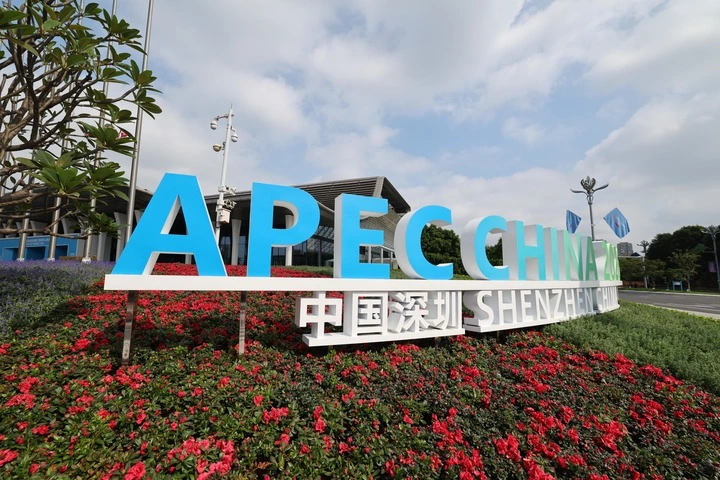
The 33rd Asia-Pacific Economic Cooperation (APEC) Economic Leaders’ Meeting, held in Shenzhen, China, on 18–19 November 2026, has once again brought the economic and strategic priorities of the Asia-Pacific region into international focus. Convened under the theme “Building an Asia-Pacific Community to Prosper Together,” the summit placed openness, innovation, and cooperation at the centre of its agenda.
The gathering was significant not merely because it brought together leaders and representatives of 21 member economies, but also because it took place amid intensifying geopolitical competition, trade uncertainties, technological transformation, energy concerns and disruptions to international supply chains. Its central question extended beyond the immediate business of trade: can economic interdependence remain a force for shared prosperity when political and strategic rivalries are becoming increasingly pronounced?
The Shenzhen Leaders’ Declaration reaffirmed APEC’s commitment to voluntary cooperation, consensus-building, regional economic integration, and the development of an open, resilient, and peaceful Asia-Pacific community. Its priorities included trade and investment, connectivity, innovation, and economic growth. These commitments provide an important framework for examining the future of regional cooperation, particularly from the perspective of developing economies such as Pakistan.
A forum of economic diversity and strategic influence
Established in 1989, APEC has developed into a major regional platform for economic dialogue. Its 21-member economies include the United States, China, Russia, Japan, South Korea, Canada, Australia, New Zealand, Mexico, Chile, and Peru, alongside several Southeast Asian economies.
The membership brings together economies with substantially different political systems, levels of development, industrial capacities, and international priorities. The participation of the United States, China, and Russia is particularly significant because their strategic competition influences international trade, technology, investment, energy, and the wider economic order.
APEC is neither a military alliance nor a customs union or supranational political organisation. Its decisions are generally based on consensus, and its commitments are voluntary and non-binding. This institutional character is both its strength and its limitations. It provides a platform for dialogue among competing economies without requiring them to surrender national sovereignty, but implementation ultimately depends on the willingness and capacity of individual members.
Trade, technology, and the changing economic order
The Shenzhen summit reflected the structural transformation of the global economy, in which traditional trade relations increasingly intersect with technological competition, energy security, and strategic considerations.
Trade and investment remain fundamental to regional prosperity. However, the expansion of protectionist measures, tariff disputes, and economic restrictions has exposed the tension between national economic priorities and the shared benefits of an open trading system. The leaders reaffirmed the importance of regional economic integration, resilient supply chains, connectivity, and continued work towards the Free Trade Area of the Asia-Pacific (FTAAP) agenda.
Technology is another defining dimension. Artificial intelligence, digital services, automation, and data-driven production are transforming the relationship between governments, businesses, and citizens. These developments offer opportunities to improve productivity and public service delivery, but they also raise concerns about digital inequality, cybersecurity, data governance, employment displacement, and technological concentration.
For developing economies, the challenge is not simply to acquire advanced technology. It is to develop the human capital, institutional capacity, regulatory safeguards, and infrastructure required to use it productively and equitably.
The summit’s emphasis on digital connectivity, skills development, innovation, and the participation of micro, small, and medium-sized enterprises is therefore particularly relevant. Its support for the APEC AI Initiative 2026–2030 and the Trade Digitalization Cooperation Framework 2027–2030 indicates an effort to connect technological advancement with productivity, employment, and regional economic integration.
Technological progress should not become another instrument through which the benefits of globalisation are concentrated among already powerful economies and corporations. Rather, it should expand opportunities for smaller businesses, developing societies and communities that remain outside the mainstream digital economy.
Great power rivalry and the limits of economic diplomacy
The presence of major powers at APEC illustrates the complex relationship between economic cooperation and geopolitical competition. The United States and China remain connected through extensive economic relationships while facing serious strategic and technological disagreements. Russia’s participation adds another dimension to the region’s political and economic calculations.
The unprecedented trilateral meeting involving Chinese President Xi Jinping, US President Donald 6 Russian President Vladimir Putin on the sidelines of the Shenzhen summit19 November attracted considerable international attention. The engagement brought three major powers into direct dialogue at a time of heightened international uncertainty, with nuclear risks and wider geopolitical issues among the subjects discussed.
Such diplomatic contacts demonstrate the continuing importance of communication among major powers. Nevertheless, bilateral or trilateral discussions must be distinguished from formal APEC decisions and should not be treated as collective commitments by all 21 member economies.
Economic forums can not, by themselves, resolve wars, territorial disputes, or strategic mistrust. They can, however, preserve channels of communication, reduce uncertainty, and create incentives for practical cooperation. This is a valuable contribution to an international environment where political disagreements increasingly threaten economic stability.
The real test of leadership is not simply the ability to dominate competing economies but the capacity to manage differences without allowing rivalry to destroy opportunities for collective development.
Different institutions, complementary possibilities
Asia and its neighbouring regions are not represented by a single regional organisation. Instead, several institutions operate across overlapping geographical spaces, each with its own membership, mandate, institutional structure, and strategic priorities.
APEC, ASEAN, SAARC, the Shanghai Cooperation Organisation (SCO), and the Economic Cooperation Organization (ECO) provide different and potentially complementary frameworks for regional engagement. Understanding these distinctions is essential to developing a more interconnected Asian economic vision.
APEC: Connecting the Asia-Pacific economy
APEC is primarily an economic cooperation forum, bringing together 21 member economies from the Pacific region. Its priorities include trade and investment facilitation, regional economic integration, digital transformation, supply-chain resilience, and sustainable growth.
Its strength lies in bringing major developed and developing economies into a common dialogue despite differences in their political systems and national interests. Its voluntary and consensus-based institutional approach offers useful lessons for regional economic diplomacy.
ASEAN: Building Southeast Asian regional cooperation
The Association of Southeast Asian Nations, established in 1967, now comprises eleven member states following the admission of Timor-Leste in October 2025.
It promotes regional peace and stability, economic integration, political and security dialogue, and socio-cultural cooperation. ASEAN’s experience is particularly relevant because it has developed practical mechanisms for regional engagement while maintaining the principles of consensus, consultation, and respect for national sovereignty.
Its institutional experience demonstrates how sustained dialogue and incremental cooperation can help build regional confidence even where national interests and political systems differ.
SAARC: An unfinished South Asian opportunity
The South Asian Association for Regional Cooperation was established in 1985 and comprises eight member states: Afghanistan, Bangladesh, Bhutan, India, Maldives, Nepal, PakistanSri Lanka.
Its objectives include improving the welfare of South Asian populations and promoting economic, social, and cultural cooperation. Despite its considerable human and economic potential, SAARC has struggled to translate its founding vision into effective regional integration.
Political tensions, restricted trade, limited connectivity, and institutional inactivity have weakened its performance. The absence of a SAARC summit since 2014 illustrates the extent of this challenge.
Nevertheless, SAARC remains relevant. Cooperation in public health, education, food security, climate resilience, disaster management, energy, and poverty reduction should not be abandoned because of political disagreements.
Regional cooperation need not begin with the resolution of every bilateral dispute. Functional collaboration in areas of common interest can help preserve institutional relevance and create conditions for greater confidence.
SCO: A Eurasian platform for security and economic cooperation
Established in 2001, the Shanghai Cooperation Organisation has evolved into a major Eurasian intergovernmental organisation. Its ten full members are Belarus, China, India, Iran, Kazakhstan, Kyrgyzstan, Pakistan, Russia, Tajikistan, and Uzbekistan.
The SCO’s mandate extends beyond trade and investment. It includes regional peace and stability, counterterrorism, the fight against extremism and separatism, transport connectivity, energy, education, science, technology, and economic cooperation.
It provides a forum for consultation among states whose geographical reach and strategic influence extend across Central Asia, South Asia, East Asia, and parts of Europe.
The organisation should not be confused with a conventional military alliance. Its institutional framework is based on intergovernmental cooperation and consultation rather than a supranational defence command.
For Pakistan, the SCO offers an important platform for engagement with China, Russia, Central Asian republics, Iran, and other regional partners. Its working mechanisms in transport, trade, agriculture, energy, investment, and poverty alleviation can support practical economic cooperation.
Pakistan’s chairmanship of the SCO Council of Heads of State for 2026–27, under the theme “Turning Vision into Action: Connectivity, Innovation and Shared Prosperity,” offers an opportunity to promote development-oriented cooperation alongside the organisation’s established security agenda.
ECO: An economic bridge across a connected region
The Economic Cooperation Organization has particularly direct relevance to Pakistan’s regional economic interests. Its institutional roots go back to the Regional Cooperation for Development (RCD), established in 1964 by Iran, Pakistan, and Türkiye. ECO was established in its present form in 1985 and expanded in 1992 to include Afghanistan, Azerbaijan, Kazakhstan, Kyrgyzstan, Tajikistan, Turkmenistan and Uzbekistan.
Its ten member countries are Afghanistan, Azerbaijan, Iran, Kazakhstan, Kyrgyzstan, Pakistan, Tajikistan, Türkiye, Turkmenistan and Uzbekistan
Unlike the wider security and political dimensions of the SCO, ECO is principally focused on regional economic cooperation. Its priorities include trade facilitation, transport and transit connectivity, energy, communications, agriculture, investment, tourism, and the development of links with international markets.
ECO’s geographical significance is considerable. It connects South Asia, Central Asia, Türkiye and the wider Middle Eastern neighbourhood. Its landlocked member states have a particular interest in reliable transit routes and access to seaports, while Pakistan’s ports and transport networks offer potential opportunities for regional trade.
However, the organisation’s potential has not yet been fully realised. Inadequate infrastructure, complicated customs procedures, limited financial resources, uneven implementation of agreements, and political instability have restricted the growth of intra-regional trade.
The challenge is to convert institutional commitments into operational transport corridors, efficient border management, competitive trade routes, and commercially viable investment.
A comparative perspective: Different mandates, shared development interests
These organisations should not be treated as competitors or interchangeable institutions. Their mandates are distinct, but their areas of work can reinforce one another.
APEC offers a broad platform for Pacific economic cooperation. ASEAN provides an established framework for Southeast Asian regional integration. SAARC represents the unfinished agenda of South Asian cooperation. SCO combines security dialogue with wider Eurasian economic and political cooperation. ECO provides a more focused mechanism for trade, transit, and economic connectivity among its ten member countries.
Their complementary possibilities can be understood through a practical division of responsibilities:
Trade and investment: APEC, ASEAN, and ECO can exchange experience in trade facilitation, investment promotion, and regional market access.
Peace and security: SCO and ASEAN provide important platforms for regional dialogue, stability, and cooperation against transnational threats.
Transport and transit: ECO and SCO can help connect Central Asia, South Asia, and adjoining markets through road, rail, logistics, and multimodal corridors.
Social and human development: SAARC, SCO, and ASEAN offer mechanisms for cooperation in education, health, poverty reduction, and people-to-people exchanges.
Digital transformation: All these institutions can contribute to digital connectivity, skills development, technology cooperation, and the responsible use of artificial intelligence.
There is also scope for greater institutional engagement through research networks, business councils, universities, and chambers of commerce and development institutions.
The objective should not necessarily be to create another regional organisation. It should be to improve coordination among existing institutions, reduce duplication, strengthen implementation, and identify projects that produce measurable benefits for their populations.
Pakistan’s opportunity: A bridge between regional frameworks
Pakistan occupies a distinctive position in this institutional landscape. It is a member of SAARC, SCO, and ECO while maintaining extensive bilateral and economic relations with APEC member economies and ASEAN states.
This provides Pakistan with several channels through which it can pursue regional economic diplomacy. Its geographical position offers potential connections between South Asia, Central Asia, China, the Middle East, and the Arabian Sea.
However, geography alone does not create economic advantage. Connectivity requires efficient infrastructure, reliable institutions, competitive production, predictable regulation, security, and sustained diplomatic engagement.
The China-Pakistan Economic Corridor (CPEC) can contribute to this wider vision if its development is linked to productive investment, export-oriented industrialisation, logistics, energy efficiency, and employment generation.
Its success should not be assessed merely through the construction of roads, power projects, or infrastructure assets. More meaningful indicators include industrial productivity, export performance, employment generation, technology transfer, fiscal sustainability, and benefits delivered to local communities.
Pakistan should also pursue stronger commercial engagement with ASEAN economies, Japan, South Korea, Australia, and other Asia-Pacific markets. This requires trade diversification, improved product standards, reliable logistics, investment facilitation, and a stronger capacity to understand international markets.
An especially timely opportunity arises from Pakistan’s leadership responsibilities in the 2026–27 cycles of both SCO and ECO. Pakistan has assumed the SCO Council of Heads of State chairmanship following the Kyrgyz Republic’s 2025–26 chairmanship. Its stated theme is connectivity, innovation, and shared prosperity.
Pakistan is also holding the ECO Council of Ministers chairmanship for 2026–27 under the theme “Reviving Regionalism for a Resilient ECO.”
These responsibilities should be treated as opportunities for measurable institutional progress rather than ceremonial diplomatic achievements. Pakistan can use its leadership to promote practical cooperation in trade facilitation, transport corridors, customs digitalisation, energy security, poverty reduction, tourism, and private-sector investment.
The designation of Lahore as the SCO Tourism and Cultural Capital for 2026–27, and its selection as ECO Tourism Capital for 2027, also offer an opportunity to connect cultural diplomacy with tourism development, investment and regional people-to-people engagement.
For Lahore and Punjab, these designations should be translated into tangible programmes involving heritage conservation, urban management, hospitality, international promotion, cultural exchanges, and private-sector participation.
Public administration and financial governance: The missing link
One of the most important lessons from regional economic cooperation concerns the quality of governance.
Trade agreements and infrastructure projects can not deliver sustainable prosperity in the absence of effective public institutions. Governments must ensure transparent procurement, sound project appraisal, disciplined public expenditure, regulatory consistency, and accountability.
For Pakistan, this means connecting regional economic ambitions with reforms in public financial management.
Public investment should be assessed through measurable economic and social returns rather than political visibility alone. Fiscal resources must be allocated according to development priorities, and projects must be monitored through transparent performance indicators.
There must also be a clear distinction between approved allocations, actual expenditure, and the outcomes achieved. A project that consumes substantial public resources without generating productive capacity or improving public welfare can not be considered successful merely because its expenditure targets have been met.
Equally important is the participation of provincial governments, local authorities, universities, chambers of commerce, and small businesses. Economic diplomacy should not remain confined to official visits and high-level declarations. It must translate into practical opportunities for exporters, investors, entrepreneurs, workers, and communities.
The effectiveness of regional cooperation ultimately depends not only on diplomatic agreements but also on administrative competence, institutional coordination, and the ability to implement commitments.
Economic justice and inclusive prosperity
The language of prosperity must also be examined critically. An increase in trade volumes or investment figures does not automatically establish that the benefits of growth are being distributed fairly.
A sustainable regional economic order must address poverty, housing insecurity, unemployment, food security, educational inequality, and access to essential public services. Women, young people, small enterprises, and disadvantaged communities must have meaningful opportunities to participate in economic transformation.
The challenge is to move from growth as an aggregate statistic towards prosperity as a measurable improvement in human welfare.
This requires a development philosophy in which economic efficiency is balanced with social justice, institutional integrity, and environmental responsibility.
Neither protectionism nor unregulated economic expansion offers a sufficient answer. What is required is an enabling environment in which enterprise can flourish while public institutions protect fairness, opportunity, and the common good.
The way forward: An interconnected Asian economy
The future of Asia will be shaped by its ability to connect economic opportunities with political stability and institutional responsibility.
APEC’s experience offers valuable lessons, but it should not be treated as a ready-made institutional model for every region. South and Central Asia have their own political, historical, and economic realities, and their regional arrangements must reflect them.
Pakistan, in particular, should pursue a practical agenda built around six priorities:
1. Trade diversification: Strengthen access to Asian and Pacific markets, improve export competitiveness, and reduce excessive dependence on a narrow range of products and destinations.
2. Regional connectivity: Develop commercially viable links through CPEC, ECO transport corridors, ports, logistics networks, and responsible engagement with Central Asian economies.
3. Institutional coordination: Use Pakistan’s engagement with SAARC, SCO, and ECO to promote practical projects, reduce duplication, and strengthen regional cooperation.
4. Digital transformation: Invest in artificial intelligence skills, digital infrastructure, cybersecurity, digital customs, and technology-enabled public services.
5. Institutional reform: Improve public financial management, regulatory transparency, investment facilitation, and accountability, ensuring that public expenditure generates measurable development outcomes.
6. Regional diplomacy: Support functional cooperation through SAARC, strengthen engagement with ASEAN, and deepen constructive relations with APEC member economies.
These priorities require continuity, evidence-based policymaking, and a national development strategy that places economic productivity above short-term political considerations.
Conclusion: Prosperity through peace
The Shenzhen APEC Summit reinforces an enduring lesson: economic interdependence can create opportunities for peace, but it can not substitute for political wisdom, justice, or responsible governance.
Asia’s future should not be defined by a contest for economic supremacy alone. Its success must also be measured by the ability of its societies to reduce poverty, improve human welfare, protect economic opportunity, and manage differences through dialogue rather than confrontation.
For Pakistan, the challenge is to transform its geographical position into genuine economic connectivity, its infrastructure into productive capacity, and its diplomatic relationships into sustainable development opportunities.
Its simultaneous engagement with SAARC, SCO, and ECO should be used to build bridges between regional markets and institutions rather than allowing these platforms to remain disconnected diplomatic arrangements.
The Asian century will have limited meaning if its prosperity remains concentrated, its regional institutions remain underutilised, and its people continue to bear the costs of political rivalry and economic inequality.
Prosperity through peace must, therefore, be more than a diplomatic aspiration. It must become a practical commitment to justice, cooperation, institutional integrity, and the well-being of humanity.

Other Related Stories







Top News



National