Israeli political leaders Gadi Eisenkot and Benjamin Netanyahu clash over the Iranian threat amid ongoing coalition talks.
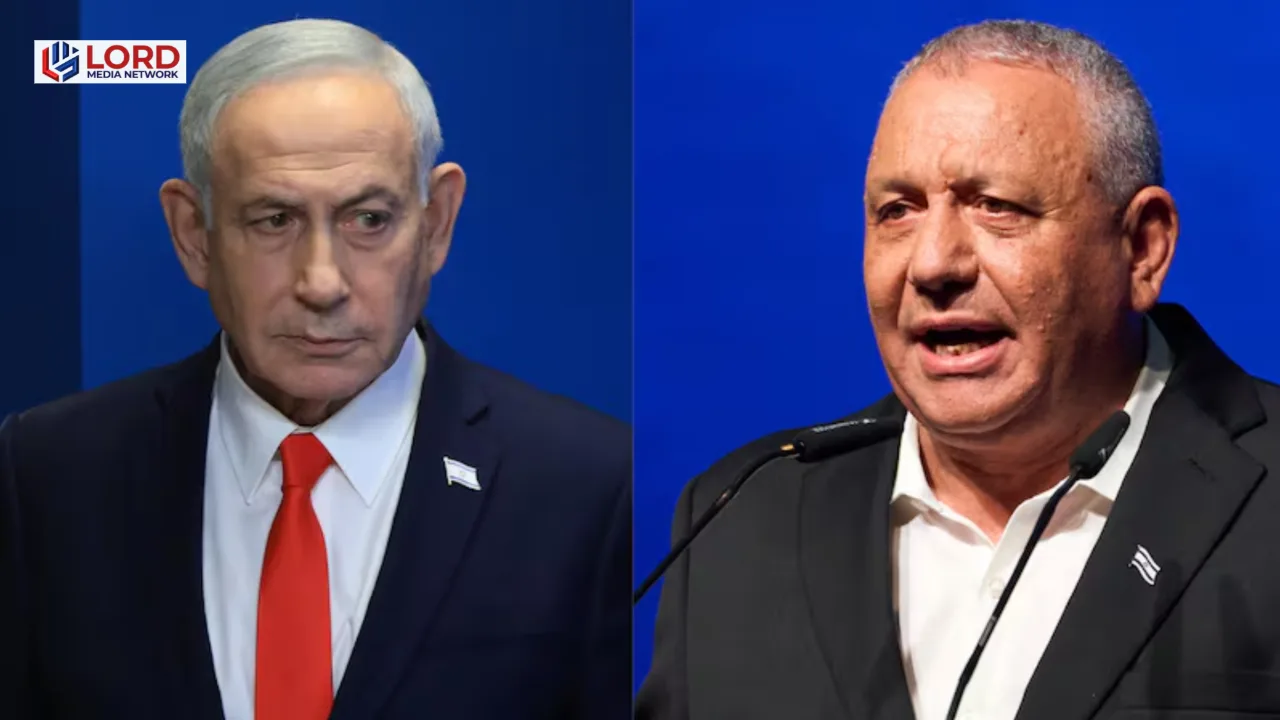
JERUSALEM, Nov. 24 (Lord Media): Israeli political rivals Gadi Eisenkot and caretaker Prime Minister Benjamin Netanyahu clashed over the urgency of the Iranian threat on Monday, as negotiations continued over forming the country’s next government.
Eisenkot, who has been tasked with forming a government following the October election, said he saw no direct and immediate threat from Iran that would require military action before a new government was established.
Speaking at a briefing in parliament, Eisenkot described Iran as Israel’s most serious threat but said there was no immediate reason to launch an attack.
Netanyahu rejected what he described as the downplaying of security threats, saying unity was necessary in the face of serious dangers surrounding Israel.
“Anyone who belittles or downplays these immediate, serious and grave threats surrounding us does so for political reasons,” Netanyahu said in televised remarks.
The remarks came ahead of a third round of coalition negotiations between Eisenkot’s centrist Yashar party and Netanyahu’s right-wing Likud party.
Representatives from the two parties held four hours of discussions on Sunday, covering several substantive issues, but failed to reach a breakthrough.
Eisenkot has until December 6 to form a government, with the deadline extendable by 14 days. His 48-member bloc needs at least 61 lawmakers in parliament to secure a majority.
His camp remains divided over whether to form alliances with ultra-Orthodox parties, Arab-majority political lists or Likud in a national unity government.
Yair Golan, leader of the left-leaning Democratic Party within Eisenkot’s bloc, ruled out joining a unity government with Netanyahu.
“We will not agree to any unity government with Netanyahu,” Golan said in parliament. He had earlier described the negotiations with Likud as “sham talks” and called for an alliance with Arab-majority lists.
Likud has set several conditions for joining a unity government, including an end to personal attacks and political boycotts targeting Netanyahu and his government.
Netanyahu has repeatedly advocated a national unity arrangement, potentially involving a rotation of the premiership between the two leaders.
However, Eisenkot has opposed serving in a government led by Netanyahu, who faces corruption charges and has also resisted calls for an independent commission of inquiry into security failures preceding the Hamas-led attack of October 7, 2023.
Last week, Eisenkot said he could propose a minority national emergency government for a parliamentary vote if efforts to form a broad-based coalition failed. LORD
Other Related Stories


Top News


National